Lampes torches LED et accessoires auto · Ningbo, Chine · sales@karlead.com

Acheter par catégorie : lampes, démarreurs, gonfleurs et soins auto

Faites glisser pour voir les 8 catégories →

Guide technique Karlead : spécifications produit, normes de prise, conformité à l'import, transport des batteries et planification des coûts. Les références de normes restent en notation internationale. Pour confirmer modèle, MOQ et devis pour votre marché : sales@karlead.com.

Lead-acid, NiMH or lithium: choosing the battery for a rechargeable torch

Two torches with the same LED count and the same price can have different batteries, and the battery decides almost everything the buyer experiences: runtime, weight, how long the torch lasts, how it charges and what it costs to ship. The catalogue's built-in-plug models run 4 V sealed lead-acid packs — here is how that choice compares with the alternatives, and when each is right.

La réponse courte

  • Sealed lead-acid (4 V or 6 V): cheapest per capacity, forgiving of over-charge, heavy — the default for built-in-plug household torches.
  • NiMH: no heavy metals, good cycle life, tolerant of partial charging, more expensive per capacity than lead-acid.
  • Lithium: lightest and strongest, but adds UN38.3 transport rules and a protection circuit to the specification.
  • The chemistry must be fixed before tooling, because the battery compartment, the charging circuit and the weight distribution all follow it.

Why built-in-plug torches usually run lead-acid

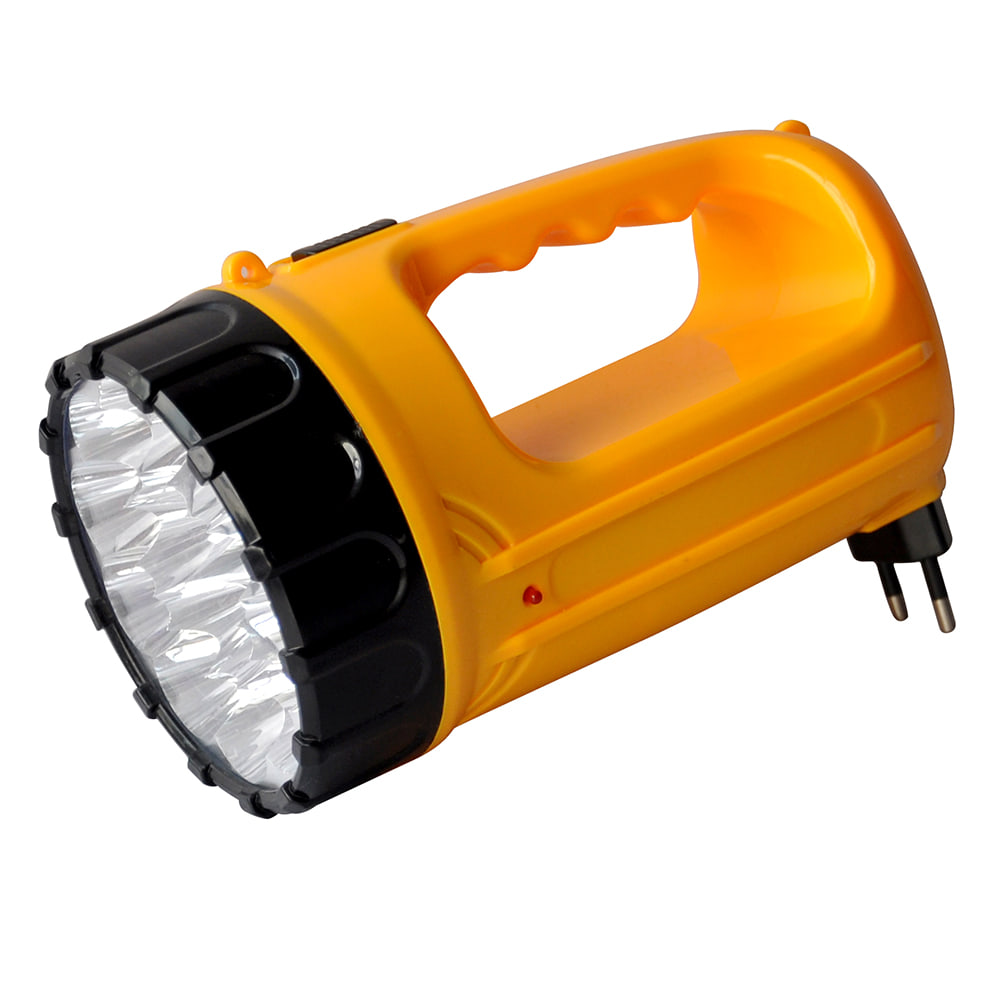
A torch that folds a mains plug into its handle spends its life on a shelf near a socket, trickle-charged and used a few times a year. That duty cycle is exactly what a 4 V sealed lead-acid pack does well: it tolerates permanent float charging, it is cheap, and it is robust against the charging discipline of a real household. The catalogue's Brazil-plug models follow this pattern — AT-615 and AT-611 both run 4 V 1200 mAh lead-acid packs, and AT-189 a 4 V 800 mAh pack, with charging from the built-in two-pin plug.

The trade-off is weight and cycle life. Lead-acid delivers fewer deep cycles than NiMH or lithium and weighs more per watt-hour. For a torch that lives by the fuse box, neither matters. For a torch that travels in a car or a pocket, both do.

The three chemistries side by side

PropertySealed lead-acid (4V/6V)NiMHLithium (Li-ion / LiFePO4)
Cost per capacityLowestMiddleHighest
Weight per WhHeaviestMiddleLightest
Deep cycles (typical)HundredsMoreMost
Float / trickle chargingTolerates permanent floatTolerant of partial charge, dislikes prolonged over-chargeNeeds controlled charging and a protection circuit
Cold performanceCapacity drops in deep coldModerateLi-ion drops; LiFePO4 holds better
Transport rulesMSDS for freightMSDS for freightUN38.3 plus MSDS, SoC limit by air
A chemistry choice is a product choice: charging behaviour, weight and shipping cost all follow from this table.

Reading capacity honestly: mAh is not the whole story

Capacity in mAh is only comparable at the same voltage. A 4 V 1200 mAh lead-acid pack and a 3.7 V 1200 mAh lithium cell hold different energies; the honest unit is watt-hours — voltage times amp-hours. When a supplier quotes runtime, ask at what LED setting and to what endpoint, because "8 hours" at low beam is a different claim from 8 hours at the 1 W spot.

Charging behaviour and what it means for the plug

Lead-acid tolerates the simple constant charging that a fold-out mains plug provides, which is why the two go together in household torches. NiMH charges happily through a plug or a USB port but wants charging to stop when full. Lithium requires a controlled charge with a protection circuit, which the product must contain regardless of where the power comes from. This is one reason plug-socket torches at low price points are lead-acid while USB-C torches trend lithium or NiMH.

What each chemistry does to your freight bill

  • Lead-acid: no UN38.3, but forwarders still request the MSDS, and the weight raises sea freight cost per unit.
  • NiMH: no UN38.3, MSDS requested, lighter than lead-acid for the same energy.
  • Lithium: UN38.3 test summary for the exact pack, MSDS, state-of-charge limits by air, Class 9 labelling for standalone batteries — but the lightest volumetric load per unit shipped.

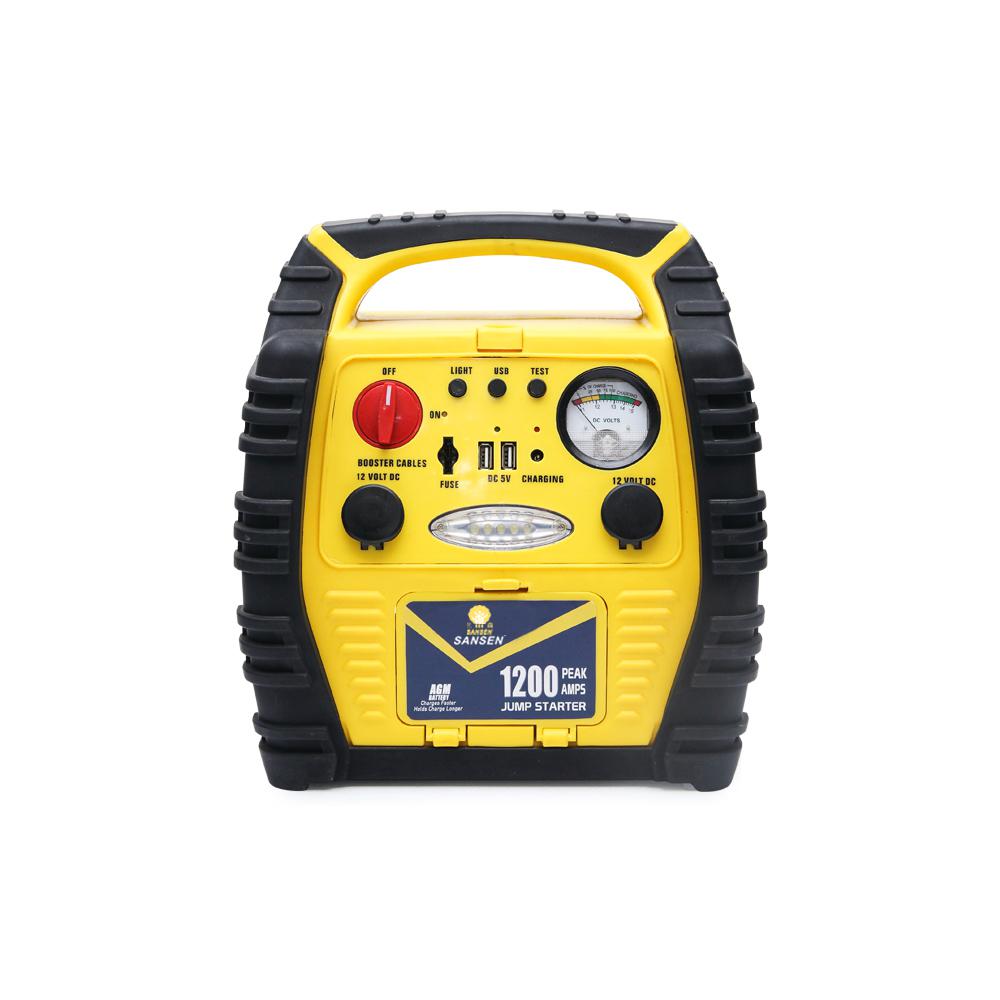
For a mixed container, the chemistry mix decides the document set. A buyer consolidating lead-acid torches with lithium jump starters manages two document tracks; a buyer standardising on one chemistry manages one. That is a real administrative saving on repeat orders.

Choosing by market, not by datasheet

Household and hardware retail in plug-standard markets — Brazil especially — favours the built-in-plug lead-acid torch: cheap, shelf-stable, always charged. Automotive and outdoor channels favour lighter packs and USB charging, where NiMH and lithium make sense. Premium gifting and workshop tools justify lithium. Fix the chemistry before tooling, because the housing, the charging circuit and the printed voltage marking are all downstream of it.

The current torch range is 4 V sealed lead-acid across the built-in-plug models, from the 800 mAh AT-189 to the 1200 mAh AT-611 and AT-615. A different battery chemistry is a separate development project: it needs its own teardown, sample approval and test records, so treat it as a new specification rather than a variant of an existing model.

Questions fréquentes

Quelles sont les caractéristiques principales du ce modèle ?

La fiche technique du ce modèle figure dans le tableau de paramètres de cette page. Confirmez prise, tension, capacité et emballage par écrit avant commande.

Le ce modèle accepte-t-il un logo et un emballage personnalisés ?

Oui. Impression du logo, couleur du boîtier, visuel de la boîte, langue du manuel et norme de prise peuvent être définis sur les moules existants, avec un MOQ par configuration.

Quels sont le MOQ et le délai du ce modèle ?

Le MOQ est coté par modèle et varie selon la couleur, la prise et l'emballage. Envoyez la quantité et le marché pour recevoir prix unitaire, MOQ et délai par écrit.

Puis-je recevoir des échantillons du ce modèle avant commande ?

Oui. Des échantillons des modèles listés sont disponibles sur demande ; les échantillons de pré-production sont soumis à votre approbation écrite avant la production en série.

Quelles options de prise et de tension pour le ce modèle ?

La norme de prise et la tension sont définies par marché (UK, US, AU, UE, Brésil NBR 14136, etc.). Indiquez le pays de destination pour fixer la bonne configuration.

Comment demander un devis pour le ce modèle ?

Envoyez un e-mail à sales@karlead.com avec la référence, le marché, la norme de prise et la quantité. Réponse sous un jour ouvré avec prix, MOQ, délai et données d'emballage.

Quelles normes de prise et tensions sont disponibles ?

UK, US, AU, UE et Brésil (NBR 14136) selon le marché, ainsi que 127 V / 220 V. Indiquez le pays de destination pour figer la configuration avant production.

Comment sont définis le MOQ et l'emballage d'export ?

Le MOQ et le nombre de pièces par carton sont indiqués par modèle sur la fiche technique. Cartons d'exportation ou emballage retail personnalisé sont convenus par écrit, avec traçabilité des lots.

Besoin d'un devis pour votre marché ?

Indiquez le modèle, la destination et la norme de prise. Nous répondons avec outillage, prix unitaire, MOQ et délai.

Contact us